
English| EUR
Suggested for you
More currencies
Choose a language
Every evening along Hoai River, hundreds of silk lanterns drift downstream carrying wishes, prayers, and remembrance. The ritual stretches back centuries, woven into Buddhist practice and Vietnamese folklore. This guide unpacks the layered symbolism behind each lantern release and what the tradition means to those who practice it today.
Quick answer
Hoi An lanterns symbolize the release of suffering and the illumination of hope, rooted in Buddhist teachings about letting go of worldly attachments. Each lantern carries a prayer or wish—often for deceased ancestors, personal healing, or family prosperity. The act of releasing a lantern on Hoai River represents sending intentions into the universe, trusting the current to carry them forward. Red lanterns honor ancestors, while yellow and pink variants invoke luck and love.
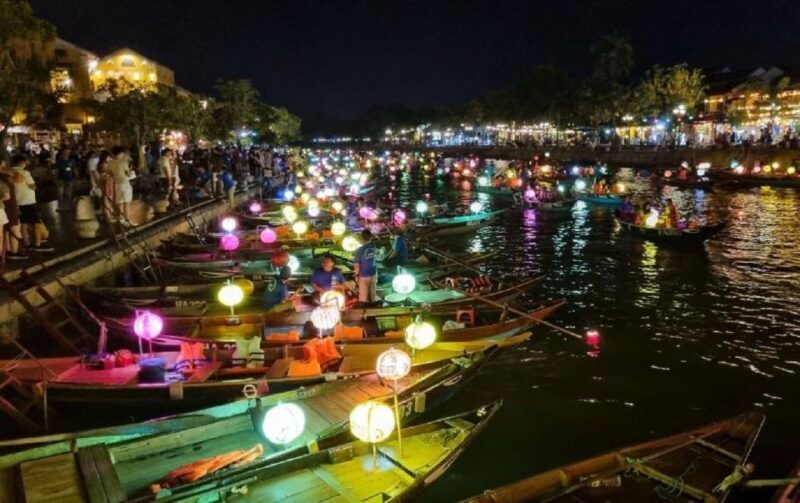
The silk lanterns that drift down Hoai River each night are not souvenirs—they are active prayers. The practice originates in Mahayana Buddhism, where light symbolizes wisdom dispelling ignorance and the floating vessel represents the impermanence of all things. Releasing a lantern is an act of surrender: you write a wish or the name of a departed loved one on paper, tuck it inside, light the candle, and send it into the current. What happens next is beyond your control, and that is the point. Hoi An lanterns meaning extends beyond individual ritual into collective memory. The town's lantern-making guilds have operated for over three hundred years, originally supplying ships and temples. When the full moon arrives on the fourteenth day of each lunar month, the entire Ancient Town extinguishes electric lights and relies solely on lanterns—a practice that honors pre-colonial rhythms and reinforces the lantern's role as both functional object and spiritual tool. The full-moon ceremony draws thousands, but the smaller nightly releases along Hoai River carry the same weight for participants. Color carries specific intention. Red lanterns, the most common, pay respect to ancestors and invoke protection. Yellow represents prosperity and is often released by business owners or families marking a new venture. Pink and orange lanterns are associated with romantic love and reconciliation. White, less common, signals mourning or the release of deep grief. The choice is personal, and vendors along the riverbank stock each hue with corresponding explanations printed in Vietnamese and English. The tradition persists because it answers a need no app or monument can: the need to externalize hope and grief in a tangible form, then let it go. Visitors participate alongside locals, and while the context may differ—tourists releasing lanterns for luck, residents honoring the dead—the gesture itself remains legible across belief systems. The lantern floats, the candle burns out, the river carries it toward the sea. What remains is the act of having released it. Hoai River opens to lantern releases from 16:00 to 21:30 daily, with the best reflections visible just after sunset. Entry to the riverbank is free; lanterns are purchased individually from vendors stationed along Nguyen Phuc Chu and Bach Dang streets. The ritual takes less than five minutes, but the preparation—choosing the color, writing the wish, steadying the vessel on the water—can take as long as you need.
“The lantern floats, the candle burns out, the river carries it toward the sea—what remains is the act of having released it.”
The tradition of releasing lanterns on the Hoai River is deeply rooted in local spiritual practices, representing the connection between the living and their ancestors. These lights serve as symbols of peace, prosperity, and the pursuit of good fortune.
In Hoi An, lanterns are considered talismans of good luck and happiness. Families often light them to bring health and prosperity to their households.
Releasing paper lanterns onto the Hoai River is a practice used to honor and remember ancestors. The floating light serves as a symbolic tribute, guiding spirits and expressing gratitude from the living.
The interplay between the lantern light and the Hoai River represents the harmony between different elements of nature. Water is traditionally associated with life and flow, while the flame represents enlightenment and hope.
Different lantern colors hold traditional significance in Vietnamese culture. Red is frequently used to symbolize luck and happiness, while yellow is often associated with royalty and prosperity.
During the monthly Full Moon Festival, the practice of releasing lanterns reaches its peak intensity. Locals and visitors gather to participate in this ritual, which transforms the river into a collective display of prayers and wishes.
The lanterns used on the river are often handmade by local artisans using silk and bamboo. This preservation of traditional craftsmanship ensures that the cultural practice remains authentic to the history of Hoi An.
The best arrival window is 17:15–18:20. Arriving just before sunset allows for the best natural light and clear lantern reflections on the Hoai River.
Warm, humid (25°C–32°C)
Occurs on the 14th day of each lunar month. Lanterns are displayed in greater numbers along the river banks.
Dry, sunny, warm (26°C–34°C)
Clear skies provide consistent visibility for lantern reflections. Outdoor activities are more predictable during these months.
Humid, occasional storms (20°C–26°C)
Water levels may rise, affecting boat operations. Check local weather reports if planning a visit during these months.
Verdict: For the clearest light and best reflections, plan your visit during the Dry Season between 17:15–18:20.
The Hoai River lantern experience operates daily during the evening hours to ensure optimal viewing of the illuminated displays.
Access to the Hoai River area in Hoi An Ancient Town is free of charge. Separate individual costs apply to the purchase of paper lanterns and boat ride services.
Verdict: A typical visitor pays 0 VND for entry, with total costs depending solely on personal choices regarding lantern purchases and boat hire.
The Hoai River is located in the heart of Hoi An Ancient Town, Quang Nam Province, Vietnam. It is most easily accessed by walking through the pedestrian-friendly streets of the historic district.
Walk via Bach Dang Street to the riverbank
Drop-off at Hoai River, Hoi An Ancient Town
Parking available near the Ancient Town perimeter
To secure the best natural light and clear lantern reflections, plan your arrival between 17:15–18:20.
Everything you need to know about hoi an lanterns meaning
The hoi an lanterns meaning is deeply rooted in local tradition, symbolizing luck, happiness, and prosperity for households. These colorful silk crafts have become iconic symbols of the town's heritage.
During festivals, the hoi an lanterns meaning takes on additional spiritual significance as locals honor their ancestors. You will see an increased number of floating offerings placed on the water.
For the best experience, visit between 17:15–21:30, as arriving in the 17:15–18:20 window offers the best natural light. This ensures you see the transition from sunset to full evening illumination.
The Hoai River itself has an entrance fee of 0 VND, as it is a public space. However, specific activities like boat rides or purchasing lanterns involve separate individual costs.
Boat rides and the release of lanterns are separate services from the free river access. You can coordinate these activities upon arrival at the riverbank to suit your schedule.
Children are welcome to participate in the tradition, provided they are supervised near the water. It is a gentle way to introduce younger visitors to the history of the local culture.
The practice of placing lights on the Hoai River connects to the broader theme of Hoi An landmarks as a center for spirituality. This floating ritual reflects the quiet, historical atmosphere of the town after dark.